
How to Check Criminal History in Gordon County
No single Gordon County search is complete. Begin with the office that created the record. The Clerk of Superior Court keeps felony cases and criminal warrants, while State Court handles misdemeanors and traffic within its jurisdiction. The Sheriff keeps its reports and jail booking data. Calhoun and the smaller cities retain their own police and municipal files. A search for a final result should reach the court even when a current-inmate entry or police report is easy to find.
Gather the full legal name, any arrest name, approximate date, date of birth when the official search permits it, arresting agency, case number, booking number, and Georgia OTN or SID if known. Use the narrowest reliable identifier first. Similar names are common, and a charge at intake may differ from the charge later filed by the prosecutor. Check every count and obtain the judgment or certified disposition when the outcome matters.
- Identify whether the record began with the Sheriff, a city police department, Georgia State Patrol, or another agency.
- Check current custody through the Gordon County jail entry, then call the jail if a recent release or transfer may explain a blank result.
- Search the correct court by exact case number or by name and a tight date range. Review each charge-level disposition.
- For your own statewide record, follow GCIC inspection procedures through a local law-enforcement agency and use fingerprints when identity is disputed.
- Request the source report, judgment, or certified disposition from its custodian instead of treating an online summary as final proof.
Gordon Criminal Records Live Apart
Gordon County court and custody records are split in both function and place. The downtown clerk files criminal cases and warrants. The Justice Center on U.S. 41 North handles booking and current custody. A Calhoun event can add a third custodian because the city police department owns its incident report and Municipal Court keeps its ordinance or traffic case. Follow the record, not merely the city name.
| Question | Best first source | Strong proof |
|---|---|---|
| Is someone held now? | Gordon Current Inmate | Jail confirmation |
| What charge was filed? | Correct court docket | Accusation or indictment |
| What was the outcome? | Clerk case file | Judgment and disposition |
| What appears statewide? | GCIC self-review | GCIC record |
The split explains why a blank result in one place does not cancel a record elsewhere. Citation cases may never create a jail booking, and released people may leave a current roster while their reports and court cases remain.
Official Georgia Background Checks
The Georgia Crime Information Center, a division of the Georgia Bureau of Investigation, maintains the state criminal-history repository. Georgia Felon Search is a public, fee-based name search for Georgia felony conviction information submitted to GCIC. It is not a full national record and does not replace a certified Gordon County judgment. GBI also explains how a person may inspect their own Georgia history through a local law-enforcement agency. Fingerprint comparison is the sound route when identity or a similar name is in doubt.
Fingerprint services for authorized purposes use the Georgia Applicant Processing Service through IDEMIA. A statutory fingerprint check for a license or qualified volunteer role follows that program's rules, not an ordinary public name search. Personal review has a different purpose: confirm what GCIC reports, compare every arrest cycle with Gordon court dispositions, and pursue correction at the agency that supplied an error.
The GBI criminal-history page is the starting point for current procedures. Its agency guidance matters because ordinary county case searches do not produce a statewide rap sheet.
The official GBI criminal-history page also shows why repository records and court records need to be read together.
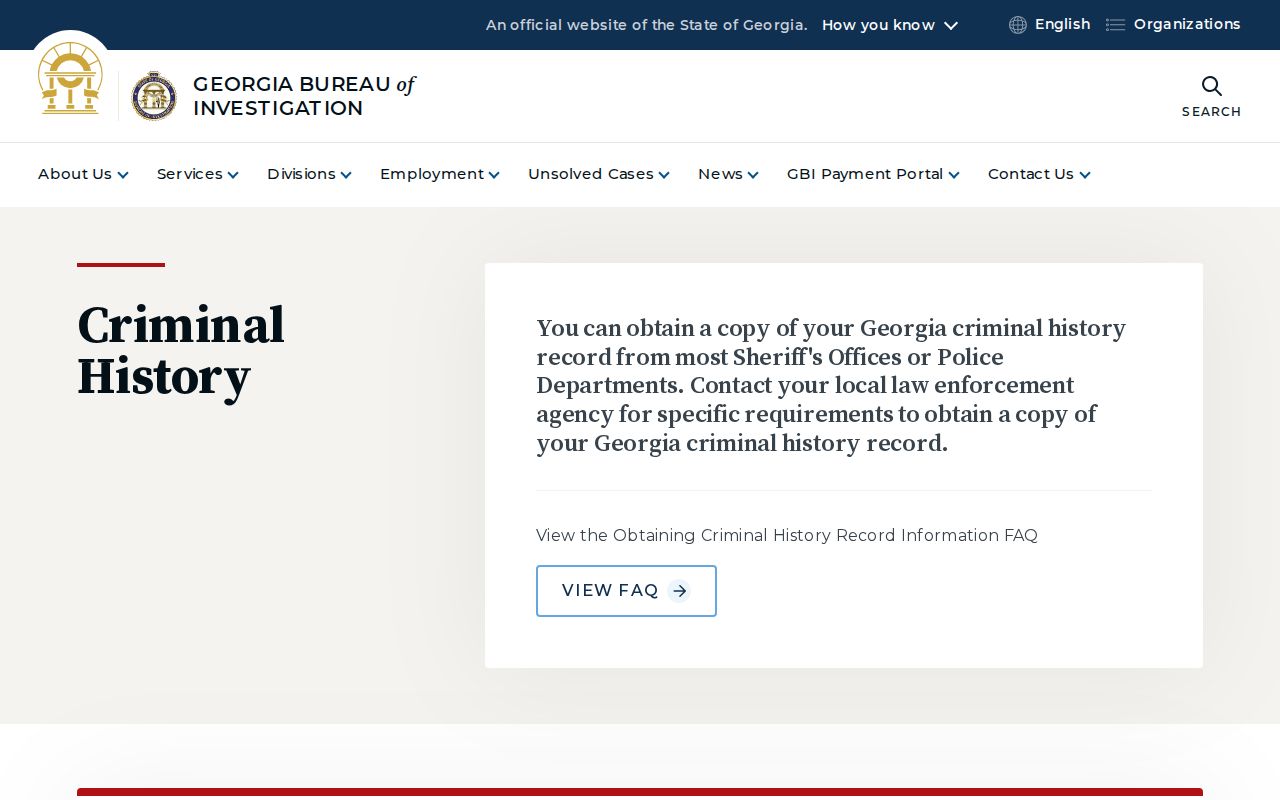
Use the state instructions for the current self-review and correction route, then return to the Gordon clerk for the disposition behind any local cycle.
Search Gordon Current Inmates Carefully
The Sheriff's official jail page links to the changing Current Inmate roster for the 376-bed Gordon County Justice Center. It is a snapshot of custody, not a historic arrest index. A booking date marks intake and may differ from the alleged offense date. Charges are intake allegations that can be amended, merged, declined, or replaced after review.

A missing name can reflect release, transfer, juvenile custody elsewhere, a citation without booking, or a roster refresh delay. Call the jail at 706-629-1244 for current custody and request historical booking data from the Jail Division when the roster no longer shows the person.
Types of Criminal Records in Gordon County
A criminal-history question often spans four layers: an agency report, a jail booking, a filed court case, and a GCIC cycle. Other records branch from that path. The clerk may hold a warrant before an ordinary case search shows a docket. Georgia Department of Corrections records track state custody and supervision, while the Georgia Sex Offender Registry serves a separate statutory notice function.
Each source answers a narrower question. An incident report describes what was reported or investigated. Booking data documents custody. A court file shows what prosecutors charged and what the judge entered. Compiled criminal-history data links qualifying fingerprinted cycles reported statewide.
- Arrest and booking records name the arresting agency, intake charge, bond, and custody status.
- Criminal court case files hold accusations, indictments, motions, pleas, dispositions, and sentences.
- Conviction and GCIC entries compile reported Georgia events but still require source verification.
- Warrants belong to the issuing venue and may be sealed or absent from a general name search.
- Supervision and registry records answer specialized questions about probation, prison release, parole, or registration.
Choose the Right Gordon Court
Superior Court has exclusive felony jurisdiction. State Court handles misdemeanors and traffic within its authority. Magistrate Court issues warrants and conducts preliminary or first-appearance functions, while municipal courts handle city ordinances and authorized statutory matters. A Calhoun bench warrant can remain in the municipal file and should not be assumed to appear in a Superior Court search.
The Georgia court eAccess directory helps route online court research, but provider coverage and registration vary. Gordon's public trial-information page publishes calendars and records rather than a complete name index.
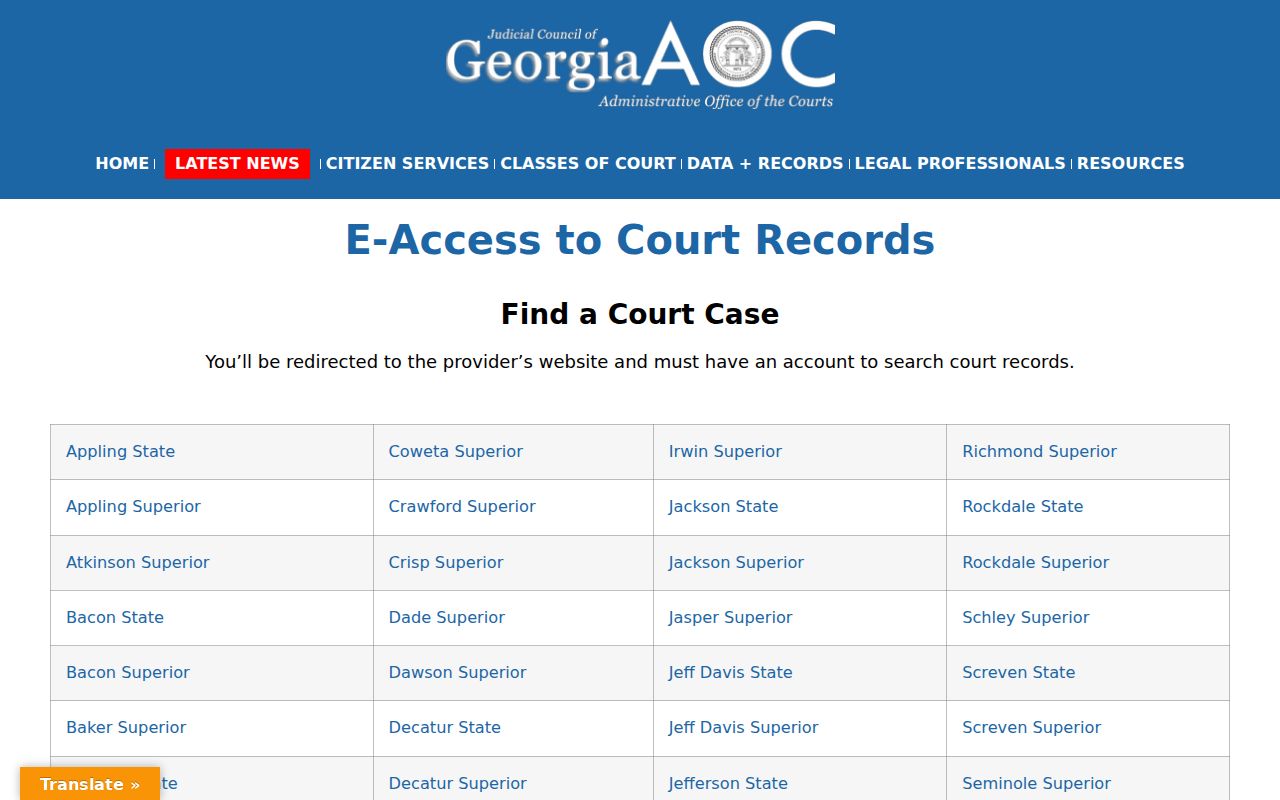
Once the right venue is known, search an exact case number or a name with a close date range. The clerk's judgment remains the best account of the outcome.
What a Gordon County Criminal Record Shows
Fields differ by source. Court records emphasize the filed case, while booking records emphasize intake and custody. A GCIC record may include identity data, arrest cycles, OTN links, charges, and reported dispositions. Read labels in their source context. “Disposed” only means an outcome was entered, not that every count ended in conviction.
| Name & Identifiers | Legal and arrest names, date of birth where available, SID, OTN, case number, or booking number. |
|---|---|
| Arrest / Booking Data | Agency, arrest and intake dates, intake charges, bond, and release or custody status. |
| Charges & Statutes | Accusation or indictment text, statute, offense level, and count-by-count allegations. |
| Disposition | Plea, dismissal, nolle prosequi, dead docket, verdict, or other result for each count. |
| Sentence | Custody, probation, fines, costs, restitution, and conditions entered by the court. |
| Custody / Supervision Status | Current jail, GDC, federal, probation, parole, or release information from the proper agency. |
Get Gordon Clerk Case Proof
For an exact charge, ask the Gordon County Clerk for the accusation or indictment. For the result, request the judgment, final disposition, and sentence. A certified copy authenticates the clerk's copy; it does not prove that an allegation was true. Gordon publishes requests by mail, fax at 706-629-2139, or staff-directory email.
| Copy service | Published fee |
|---|---|
| Unassisted copy | 50 cents per page |
| Assisted copy | $1 per page |
| Certification | $2.50 |
The official Clerk page identifies the county office and current service links.
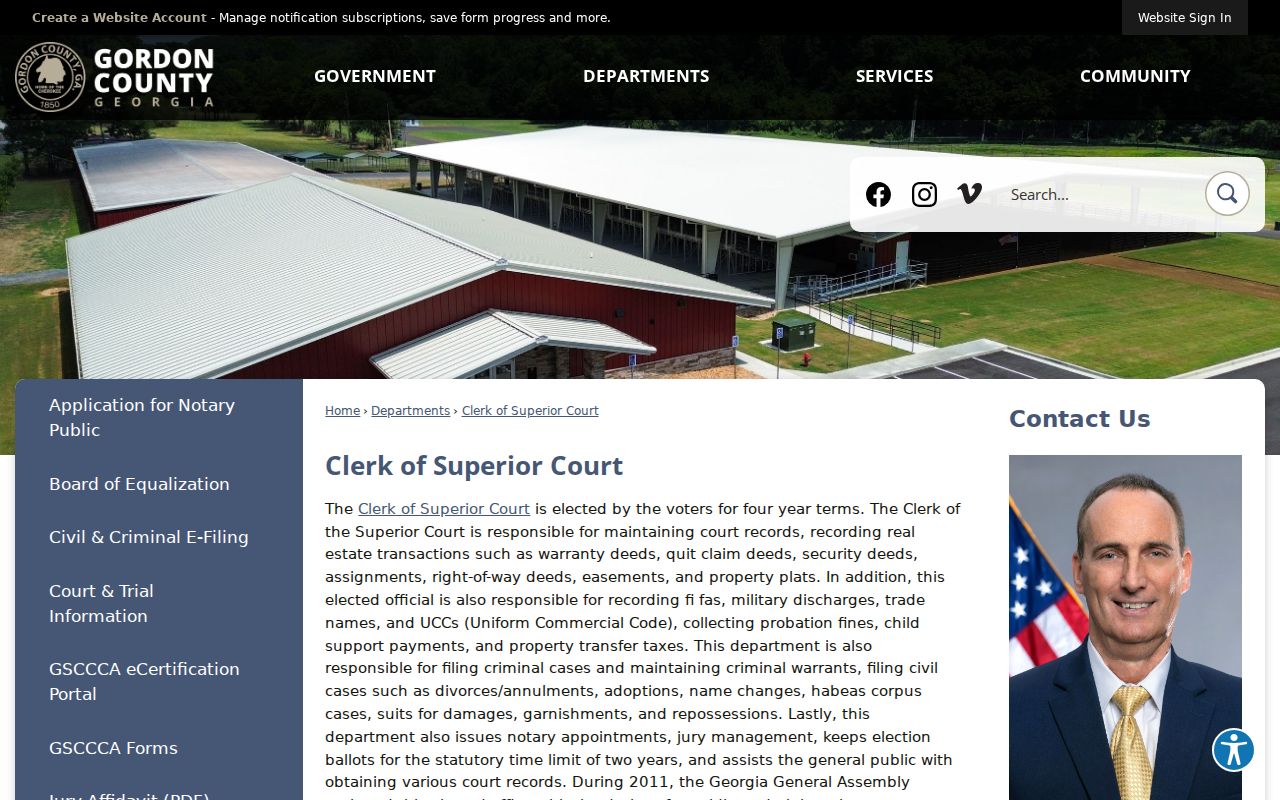
Ask whether an electronic image exists and whether certification is truly needed before paying for a formal copy.
Public Access Laws
The Georgia Open Records Act generally requires access to nonexempt public records and a response within three business days. That response may give a production timetable or cost estimate rather than the full file. Criminal-history dissemination has separate rules, and court confidentiality can protect sealed matters, juveniles, victims, minors, personal identifiers, and active investigative material. Agencies should release separable public portions when lawful redaction can protect the rest.
Key Statutes:
O.C.G.A. § 50-18-71 provides the request and response framework for Georgia public records.
O.C.G.A. § 35-3-34 governs access to and dissemination of criminal-history information.
O.C.G.A. § 35-3-37 sets record-restriction and related court-sealing procedures.
O.C.G.A. § 42-1-12 controls Georgia sex-offender registration and public registry duties.
Request Gordon Records by Custodian
Gordon County names Hollis Barton as its Open Records Officer and publishes a request form. A useful request states the record type, agency, date range, event location, report or booking number, desired format, and a cost ceiling. Ask for releasable portions and the legal basis for any withholding. Police narratives should go to the agency that created them; court documents go to the clerk rather than the general county channel.
The county government website leads to its Public Records and Documents page, the stable official entry for the current form and instructions.
Preserve the request, acknowledgment, estimate, and response. If a request is too broad, narrow it by date, incident, and record component instead of asking for every record about a person.
Sealed, Restricted, and Protected Records
Georgia uses the term record restriction, not a promise that an arrest was erased. Qualifying criminal-history information becomes unavailable to ordinary public and private requests while authorized criminal-justice users may retain access for defined purposes. Dismissal, nolle prosequi, no further action, dead docket, or no record on file can support analysis, but eligibility depends on the facts and each charge. A guilty result ordinarily does not qualify through the routine route.
For arrests after July 1, 2013, GBI directs applicants to the prosecutor rather than an arresting-agency application. Older arrests use a three-section restriction form routed through the arresting agency and prosecutor before GCIC. Court sealing and GCIC restriction are related but distinct. After processing, review your GCIC history again and test public court access. Juvenile material, sealed warrants, victims, minors, Social Security numbers, and financial-account data follow their own confidentiality rules.
Find Gordon Custody Beyond Jail
A person sentenced to state custody may move from the Gordon jail roster to the Georgia Department of Corrections Find an Offender service. Federal custody belongs in the Bureau of Prisons locator. VINELink provides status and notifications but is not a clerk-certified disposition source. County, state, and federal systems should not be treated as interchangeable.
The official GDC offender query searches state corrections records.
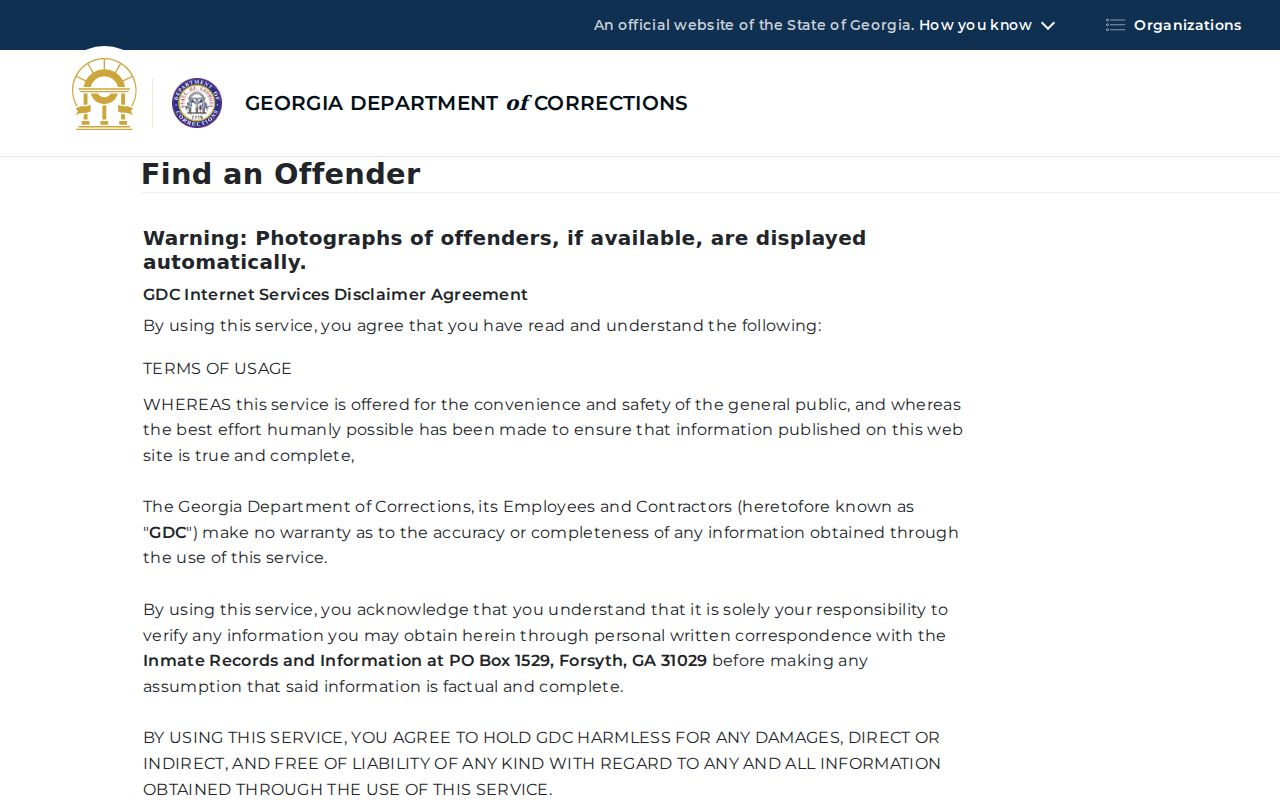
A GDC result documents the corrections record it displays. It does not list every Gordon County arrest or replace the trial court's judgment.
Criminal Records by City in Gordon County
Calhoun, Resaca, and Fairmount add city-level custodians to the Gordon County record path. Calhoun Police writes its own reports and Municipal Court keeps city ordinance and traffic files. In Resaca and Fairmount, verify the current police or service arrangement before sending a request because small-city staffing can change. Custodial arrests normally route to the county jail, while city citations may never create a booking.
Calhoun Criminal History
County seat · Police reports, municipal cases, and Gordon jail routing
Resaca Criminal History
About 1,000 residents in 2020 · Municipal contact and county fallbacks
Fairmount Criminal History
About 750 residents in 2020 · City custodian and Gordon court routing
Read Gordon Dispositions Count by Count
A case can end differently on separate counts. Read the accusation or indictment, docket events, and final judgment together. A booking charge is provisional, while the filed charge reflects the prosecutor's decision. One count may be dismissed as another ends by plea or verdict.
- Nolle prosequi
- A prosecutor's decision not to proceed on that count. It is not a trial acquittal.
- Dead docket
- An inactive status that is not automatically the same as final dismissal.
- First Offender
- A distinct Georgia statutory disposition whose later discharge must be read with the sentence.
- Certified disposition
- A clerk-authenticated record of the court's entered result.
When a disposition is missing from GCIC, obtain official court or prosecutor documentation and ask the source agency to transmit the correction. GCIC cannot rewrite source information without proper support.