
How to Check Criminal History in Resaca
Start with the event, not a broad name search. The date, location, citation, report number, and badge or agency name can reveal whether Resaca municipal staff, a Gordon County deputy, or the Georgia State Patrol made the record. That distinction controls where the report lives. A city address alone does not prove that Resaca keeps the police file.
- Review the paperwork and identify the agency that responded in Resaca.
- Use the official Resaca contact for a city report, ordinance record, or municipal citation.
- Ask the municipal clerk where the matter was heard and request the docket or disposition through that court.
- Check Gordon County jail custody and the correct county court if the Resaca event led to booking or prosecution.
- Use the GBI or another state channel only for the narrower statewide question that channel answers.
A request works best when it names one record and one date range. State whether inspection or a copy is wanted, request the preferred format, and give a cost ceiling. If the city did not create the file, ask which agency did and redirect the request.
Verify Resaca Police Records First
Resaca is a small incorporated city with a limited municipal footprint. The research did not verify a stable, dedicated police-record portal or a fixed current service arrangement. Staffing and service agreements in small cities can change, so the first useful question is who handled the incident on that date. The official city contact is the proper place to confirm that fact.
Do not assume every event within Resaca was handled by city staff. A Gordon deputy may own one report, while a Georgia trooper may own another. The arresting or investigating agency keeps its own narrative, supplements, and related material. Gordon County’s general custodian is not a substitute for the office that made the record.
Note: Confirm the responsible agency before paying for copies or sending the same broad request to several unrelated offices.
The Resaca Police Department
For a Resaca municipal or public-safety record, use the city’s official contact route and describe the event precisely. Include the incident date and place, any report or citation number, the record type, and the name used on the document. Add requester contact details so the custodian can clarify scope or provide an estimate.
No dedicated Resaca web form was verified. That means the telephone, counter, mail, or other written channel confirmed by city staff matters more than a portal search. Ask which method the city currently accepts and whether the requested file belongs to the city. A well-bounded request might seek the releasable incident report and final status rather than every record connected to a person.
Some parts may be withheld or redacted. Active investigative material, protected victim details, juvenile information, security content, and personal identifiers can have access limits. Request the public portions that can be separated from protected material instead of treating a partial exemption as the end of the search.
Route Resaca Criminal Reports Correctly
The agency named on the citation or report is the strongest routing clue. Resaca’s city contact handles records created by city municipal or public-safety staff. The Gordon County Sheriff handles a deputy’s report and the jail’s separate booking file. Georgia DPS should receive a request for a State Patrol report. Each channel can hold a different piece of the same event.
| Resaca event | First record holder | Record to request |
|---|---|---|
| City ordinance or citation | Resaca clerk or municipal contact | Citation, docket, disposition |
| Gordon deputy response | Gordon County Sheriff | Incident or arrest report |
| State Patrol response | Georgia DPS | Trooper crash or incident report |
| Custodial arrest | Gordon County Jail | Booking, charge, bond, release data |
The report and booking are not duplicates. A report describes the responding agency’s work. A booking records intake and custody. If charges were filed, the court docket then supplies the formal case history and outcome.
Arrests and Bookings in Resaca
A custodial arrest linked to Resaca ordinarily leads the searcher to the Gordon County jail channel. The official county jail page provides the Current Inmate entry. It describes present or very recent custody, not a lasting index of all Resaca arrests. Someone released, transferred, or no longer held may disappear from the current list.
For a historical Resaca booking, contact the Jail Division and ask for the booking sheet, booking and release times, intake charges, bond history, and arresting agency. Those fields describe custody at intake. They do not prove guilt, and an initial charge may later be changed, merged, declined, or dismissed.
The Gordon County Justice Center is at 2700 U.S. 41 North, Calhoun, GA 30701. The published jail telephone is 706-629-1244, with weekday office hours from 8:30 a.m. to 5 p.m. The full county process is covered in the Gordon County arrest history resource.
Find Resaca Booking Records
An empty Current Inmate result answers only one question: the person was not shown in current Gordon custody at that moment. It does not show that no Resaca arrest occurred. A citation and release may never create a jail stay. A short stay may end before the search. State prison custody appears through the Georgia Department of Corrections rather than the county roster.
Use the arrest date, arresting agency, and any booking number to request the durable jail record. Then compare the intake charge with the filed court charge. This guards against a common error in Resaca criminal record searches: treating the first label entered at booking as the last word on the case.
Note: Bond is security for court appearance, not a fine or a finding that the alleged offense occurred.
Resaca Municipal Court Records
Resaca ordinance and municipal citation records should begin with the city clerk or current court contact. Ask whether the case is heard locally or through a shared arrangement. Also confirm the judge or clerk, calendar, copy method, fee, and warrant contact. The research found no stable public case portal, so a phone, counter, or written request is the documented fallback.
| Court Name | Resaca municipal court or the current shared court confirmed by the city |
|---|---|
| Case Types Heard | City ordinance violations, citations, traffic, and other matters authorized for municipal courts |
| Case Lookup Channel | City clerk or current court contact; no stable public name-search portal verified |
| What the Docket Shows | Case or citation number, filed matter, court events, warrant status, and disposition when maintained |
| Copies & Fees | Ask the current clerk for format, certification options, and the current charge before ordering |
A missed municipal date may create a bench warrant in that court’s file. Searching only Gordon Superior Court can miss it. Confirm current status and any recall directly with the issuing court rather than relying on an old notice.
Classify Resaca Criminal Cases
Venue tells the reader which clerk holds the case. A Resaca ordinance or qualifying traffic matter can remain municipal. Gordon County State Court handles misdemeanors within its jurisdiction. Superior Court has exclusive felony jurisdiction. Magistrate Court may handle warrants and early proceedings, but the later prosecution can appear in another court.
- Citation
- A written charge or notice that may not involve a jail booking.
- Accusation
- A prosecutor’s charging document, often used in a misdemeanor or eligible felony case.
- Indictment
- A grand jury’s formal felony charging document.
- Disposition
- The outcome entered for each charge, such as dismissal, plea, trial result, or another final status.
When a Resaca matter becomes a county prosecution, request the docket first, then the charging document and judgment for durable proof. A docket marked “disposed” means an outcome was entered. It does not always mean conviction. Each count must be read on its own.
Where Resaca Records End Up
A Resaca incident report stays with the agency that made it. A custodial event creates a separate Gordon jail record. Prosecutors decide what charge, if any, becomes a court case, and the clerk records the docket and disposition. Eligible fingerprinted arrest and outcome data can then reach the Georgia state repository.
Record flow: Resaca public-safety agency › Gordon County Courts › Georgia Bureau of Investigation, Georgia Crime Information Center
This flow explains why one search rarely supplies the full answer. Recent local activity may exist before the state record is updated. Municipal matters may never form a reportable GCIC arrest cycle. Older court outcomes can also require correction by the clerk or prosecutor that supplied the source data.
Resaca Supervision Records
Probation and parole come after different legal events. Adult felony probation is supervised through the Georgia Department of Community Supervision. Probation follows a court sentence or order. Parole follows release authority after a prison sentence and is governed by the Georgia State Board of Pardons and Paroles, while DCS carries out field supervision.
The DCS site is a useful source for agency structure and supervision contacts, but it is not a Resaca police-report database. Use the sentencing court for the judgment that imposed probation. Use the state parole authority for parole decisions. Internal supervision notes are not the same as a public court file.
The official DCS source also shows how Resaca-linked felony records can continue beyond the city and county stages.
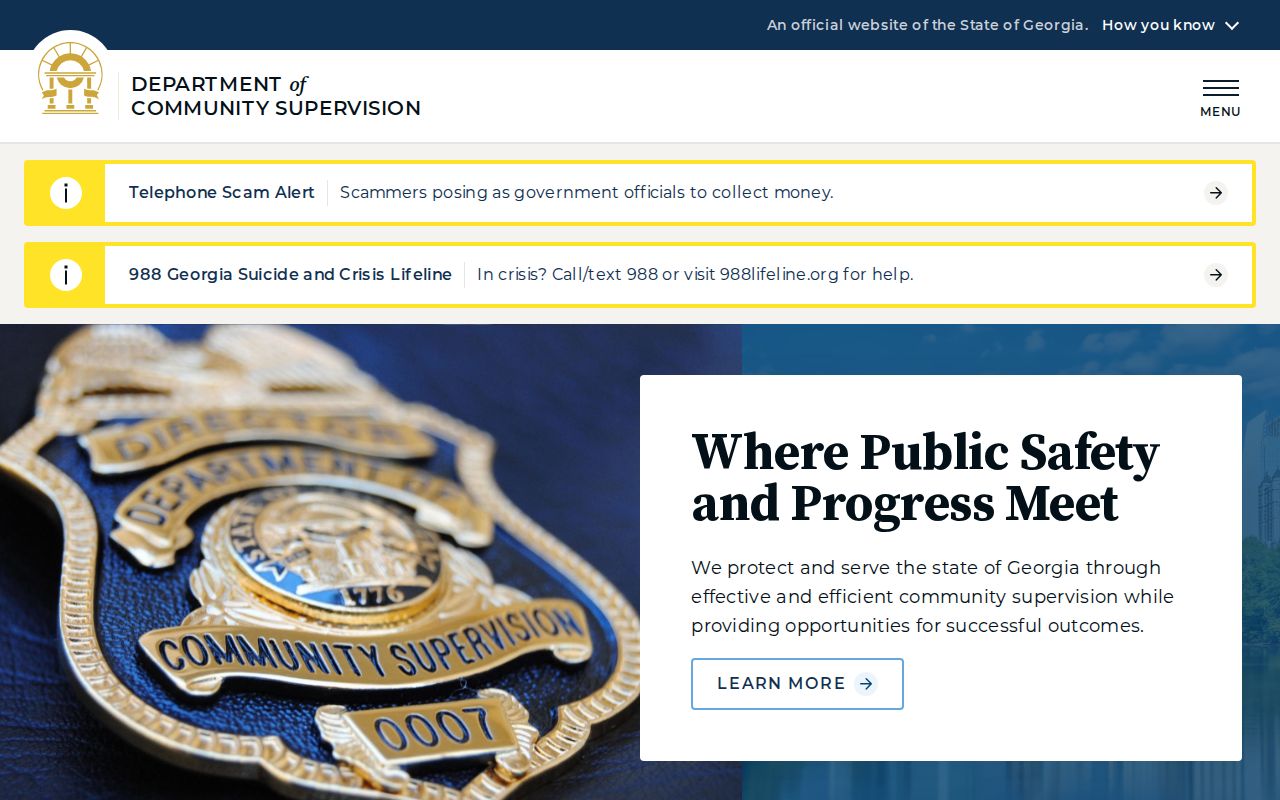
That state layer should be checked only when a sentence or release status makes it relevant.
Resaca Parole Record Route
A Resaca case that ends in state prison can produce later parole records outside city custody. The Georgia State Board of Pardons and Paroles is the parole authority. Its role differs from the court that imposed sentence and from DCS staff who supervise a person in the community.
The Board’s official source helps identify the proper state authority for parole matters connected to a Resaca criminal case.
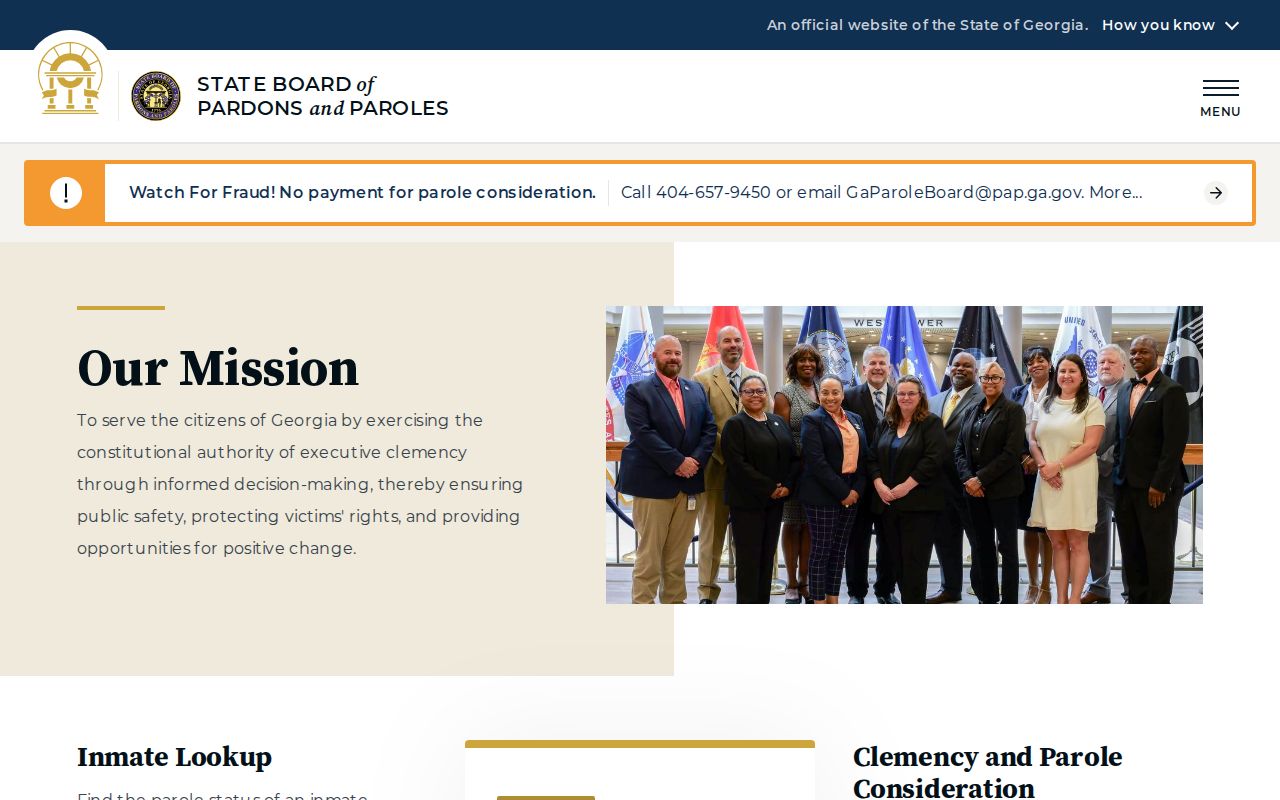
For the underlying conviction, return to the Gordon court judgment. A parole page or supervision status cannot replace a certified disposition, and it does not list every Resaca arrest.
Note: Probation follows a court order; parole concerns conditional release after a prison term and uses a different state authority.
Public Access Rules
The Georgia Open Records Act applies to public records held by Resaca agencies, subject to lawful exemptions. An agency generally must respond within three business days by producing available material or giving a timetable and legal basis when production cannot occur then. This is a response rule, not a promise that a large file will be complete within three days.
Ask for releasable, separable portions when a record contains protected data. Court sealing and GCIC record restriction are distinct. A restricted arrest cycle can be limited in ordinary criminal-history disclosure while a court record may require its own judicial sealing analysis.
Keep the request, acknowledgement, estimate, and final response together. If Resaca cites an exemption, ask for the exact legal basis and narrow the request when that will reach a public portion. The Georgia Attorney General provides open-government guidance, but the office that holds the Resaca record remains the custodian that must answer.
Key Statutes:
Georgia Open Records Act, O.C.G.A. §§50-18-70 through 50-18-76 sets the public-access process and allows statutory exemptions.
O.C.G.A. §35-3-34 governs consent-based history access and the narrower public felony-conviction route.
O.C.G.A. §35-3-37 governs qualifying record restriction and related court-record sealing.