
How to Check Criminal History in Fairmount
Start with the event, not merely the Fairmount address. Small-city service arrangements can change, and the responding agency owns its report. Paperwork may show a Fairmount officer, Gordon County Sheriff deputy, or Georgia State Patrol trooper. City Hall is the practical first contact when the agency or current municipal court arrangement is unclear. Ask who serves as records custodian, which delivery methods are accepted, and whether a case was handled as a citation or a custodial arrest.
- Identify the responding agency from the citation, report number, badge information, or arrest paperwork.
- Ask that agency for the incident or arrest report, using a narrow date range and location.
- Contact the Fairmount municipal clerk for a city citation, ordinance matter, or municipal bench warrant.
- Check Gordon County Jail for custody and the proper Gordon court for charges filed outside municipal court.
- Use an official Georgia channel only when the question extends beyond one local event.
Fairmount City Hall Starts Requests
The official Fairmount website is the stable starting point for current city contacts and service arrangements. Its public-facing city image helps identify the government source rather than a commercial people-search page.
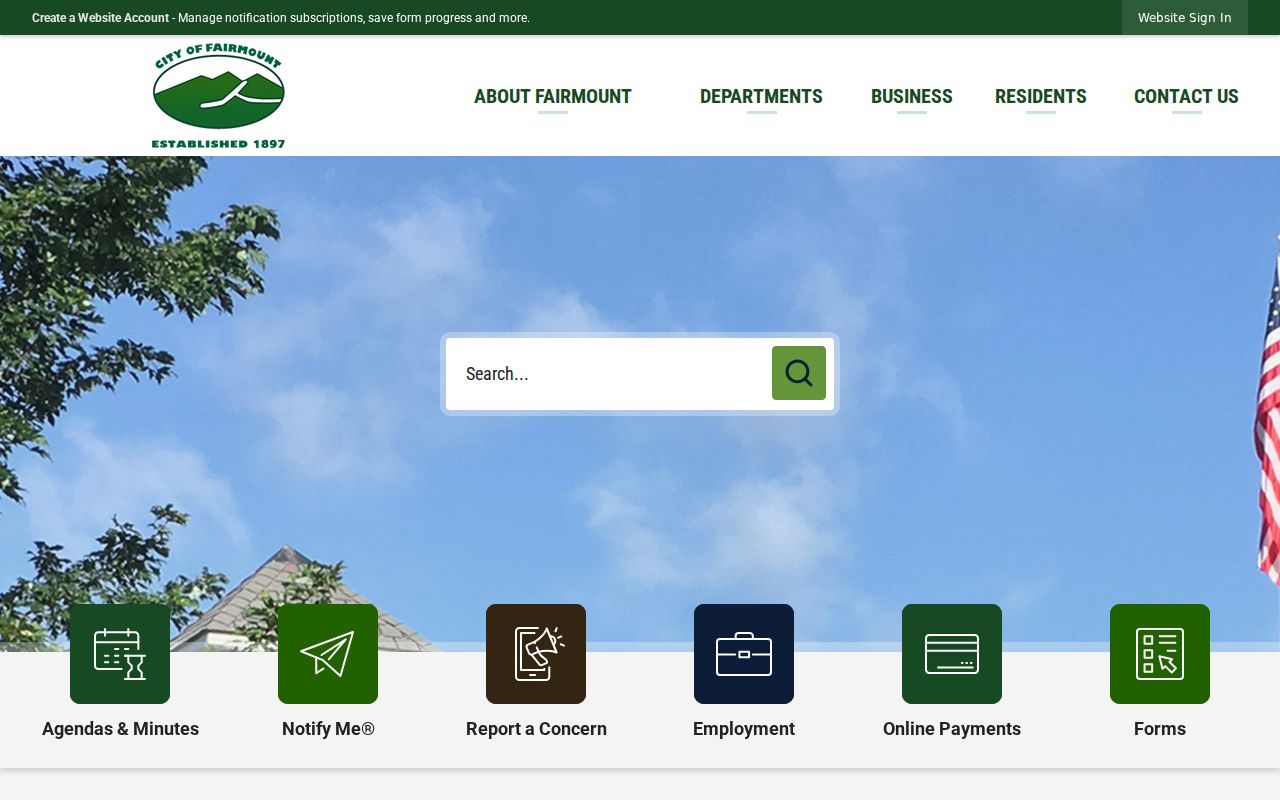
No dedicated Fairmount police-record form, public name portal, or official city app was verified in the indexed official material. That gap matters. Call or write City Hall before sending personal information, and record the date and name of the official who confirms the custodian. Ask whether email, mail, or counter requests are accepted. A useful request gives the event date, location, report or citation number, involved role, desired document, delivery format, and a cost ceiling. It should seek releasable portions rather than an unbounded file on a person.
Distance from Fairmount to county offices in Calhoun makes a preliminary phone or email check useful. Confirm that the office has the record before arranging a counter visit or asking for certification. Electronic delivery may meet a simple review need, while a certified copy is appropriate when formal proof of a court filing is required. Certification authenticates the clerk's copy; it does not establish that every allegation in the filing is true. Ask for the least costly format that serves the purpose.
The Fairmount Police Department
Fairmount police or public-safety records are agency records, not a countywide pool. If city personnel created an incident report, arrest report, supplement, or citation, request it through the current city custodian. Ask for the precise component needed. An incident narrative describes what was reported and investigated. An arrest report documents the officer’s legal action. Neither proves what charge a prosecutor later filed or how a judge resolved it.
Location alone cannot identify the custodian. Gordon deputies and state troopers also work within the area, and their reports stay with their own agencies. A joint response may create more than one record. Use the agency name, report number, and officer details on the paperwork to separate them. Active-investigation material, juvenile information, victim details, medical facts, security information, and personal identifiers may be withheld or redacted under Georgia law.
Request terms should track the record actually needed. For video, give a time window and identify the camera, vehicle, or unit if known. For dispatch material, distinguish the 911 audio, CAD event chronology, and radio traffic. Ask for supplements when they matter, but exclude duplicate pages. If the city needs clarification, a narrower description can reduce search and redaction time while preserving the key facts.
Who Owns Fairmount Reports?
A short routing check prevents delays. Fairmount-created material goes to the city. A Gordon deputy’s narrative goes to the Sheriff. A trooper arrest or crash report goes through the Georgia Department of Public Safety channel. The Gordon Clerk holds filed court documents, not the police narrative. This difference remains important even if all paths later refer to the same person or event.
| Fairmount event | First record channel | Best proof |
|---|---|---|
| City officer response | Fairmount city custodian | Released report or citation |
| Gordon deputy response | Gordon County Sheriff | Sheriff report |
| State trooper response | Georgia DPS | Trooper report or crash record |
| Filed felony charge | Gordon Superior Court Clerk | Indictment, judgment, and sentence |
Arrests and Bookings in Fairmount
A custodial Fairmount arrest ordinarily proceeds to the Gordon County Justice Center, while a citation may never create a jail entry. The official jail page links a Current Inmate roster. Search promptly, then call the jail at 706-629-1244 if the person does not appear. A release, transfer, juvenile placement, citation and release, or roster refresh delay can explain an empty result. The current list is a custody snapshot, not a historical arrest index.
Booking data may show intake time, booking number, arresting agency, initial charge, bond, custody status, and release information. Each field has limits. Intake time is not always the offense time, bond is not a fine, and an intake charge can later be amended or declined. For older Fairmount bookings, submit a focused request for the booking sheet, booking and release timestamps, charge and bond history, and arresting agency. The broader Gordon County arrest history route explains county channels in greater depth.
From Fairmount to County Custody
The trip from eastern Gordon County to the county-seat record counters creates a practical split. Fairmount may hold the officer’s report, but the Justice Center creates the custody record. Intake commonly adds identity checks, property inventory, screening, fingerprints, a booking photograph, charge validation, bond or first-appearance information, and later release or transfer data. Those steps do not turn an allegation into a conviction.
Juveniles are not housed in Gordon’s adult jail. The county reports that juvenile detainees transfer to facilities in Rome or Dalton. For adults, the Justice Center also holds some people awaiting state or federal transfer and some serving qualifying misdemeanor terms. A reader seeking the outcome must leave the roster and check the court that received the filed charge.
Fairmount Municipal Court Records
Fairmount municipal records may include city ordinance cases, traffic citations, and other matters Georgia law permits a municipal court to hear. Confirm the current judge, clerk, hearing venue, schedule, payment method, copy practice, and any lookup controls with the city. No stable public name-search portal was verified. A payment screen, if offered, should not be assumed to display a full docket or final court file.
| Court Name | Fairmount municipal court or the city’s currently confirmed service arrangement |
|---|---|
| Case Types Heard | City ordinances, qualifying traffic matters, and other authorized municipal cases |
| Case Lookup Channel | Municipal clerk by telephone, written request, or counter unless the city confirms a current portal |
| What the Docket Shows | Citation or case number, parties, charge, dates, court events, warrant events, and disposition where public |
| Copies & Fees | Confirm current availability, format, fee, and certification directly with the clerk |
Fairmount Bench Warrants Stay Local
A missed municipal date can lead to a bench warrant recorded by the issuing court. Do not assume it will appear in a Gordon Superior Court name search. Contact the Fairmount municipal clerk or the currently responsible court, identify the citation and case, and ask for present status and any required appearance, bond, or recall process. A blank web result is not proof that no warrant exists.
An arrest warrant, bench warrant, search warrant, and probation warrant serve different roles. For one’s own warrant, verify instructions with the issuing court or counsel and keep any receipt or recall order. Database updates can lag after a hearing or payment. Written proof from the court is more reliable than an anonymous list or a third-party warrant page.
Municipal jurisdiction also limits what the city clerk can certify. A Fairmount ordinance or traffic file may stay local, but a misdemeanor prosecuted in Gordon State Court belongs with that clerk. A felony accusation or indictment belongs in Superior Court. When paperwork lists more than one case number, ask each clerk about its own docket rather than assuming one result resolves every matter.
Where Fairmount Records End Up
A Fairmount event can create several linked but distinct records. The responding agency writes its report. Gordon Jail makes booking data if custody occurs. A municipal clerk keeps a city citation, while Gordon State Court generally handles misdemeanors and Superior Court has exclusive felony jurisdiction. Courts and justice agencies then report qualifying arrest and disposition data to the Georgia Crime Information Center.
Record flow: Fairmount public safety › Gordon County courts › Georgia Bureau of Investigation, Georgia Crime Information Center
Recent activity may appear locally before state data is complete. A municipal matter may never become a fingerprint-based state cycle. Conversely, a Georgia record can include events beyond Fairmount. For authoritative felony detail, request the accusation or indictment, judgment, sentence, and count-by-count disposition from the Gordon Clerk rather than treating a booking charge as final.
Fairmount Fingerprint Record Channels
The GBI GAPS instructions describe Georgia Applicant Processing Service as the official fingerprint channel for authorized purposes. The captured GBI material helps distinguish an agency-authorized fingerprint process from a casual public name search.
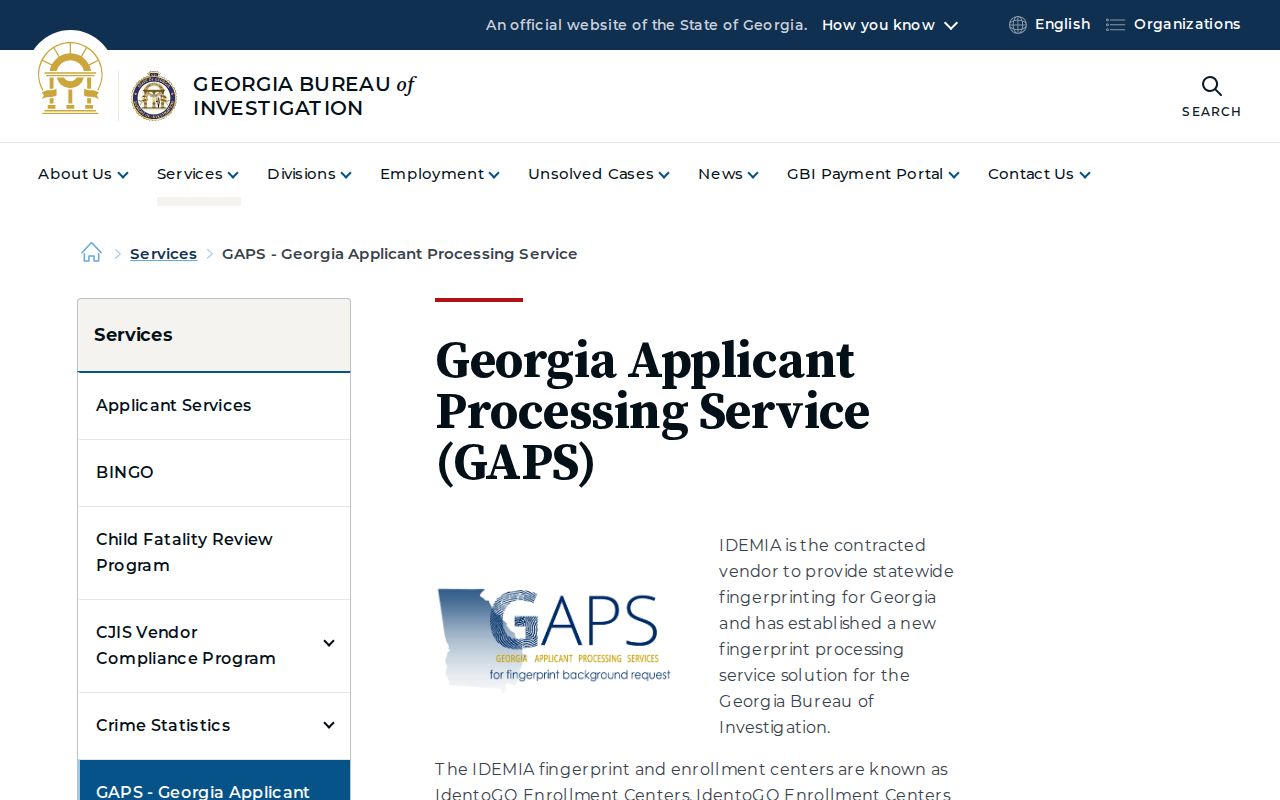
Enrollment requires the requesting agency’s service code or ORI, valid photo identification, and the fee shown for that service. Results ordinarily return to the authorized agency, not as a public report anyone can order. That makes GAPS unsuitable as a substitute for a Fairmount incident report or municipal docket. It is relevant when a statute or authorized agency requires fingerprint identification, and for resolving identity questions through the proper official process.
Georgia Checks Beyond Fairmount
The official Georgia fingerprint enrollment site is where a person with the correct service code begins GAPS scheduling. Its enrollment screen reinforces that fingerprint service depends on the requesting agency’s instructions.
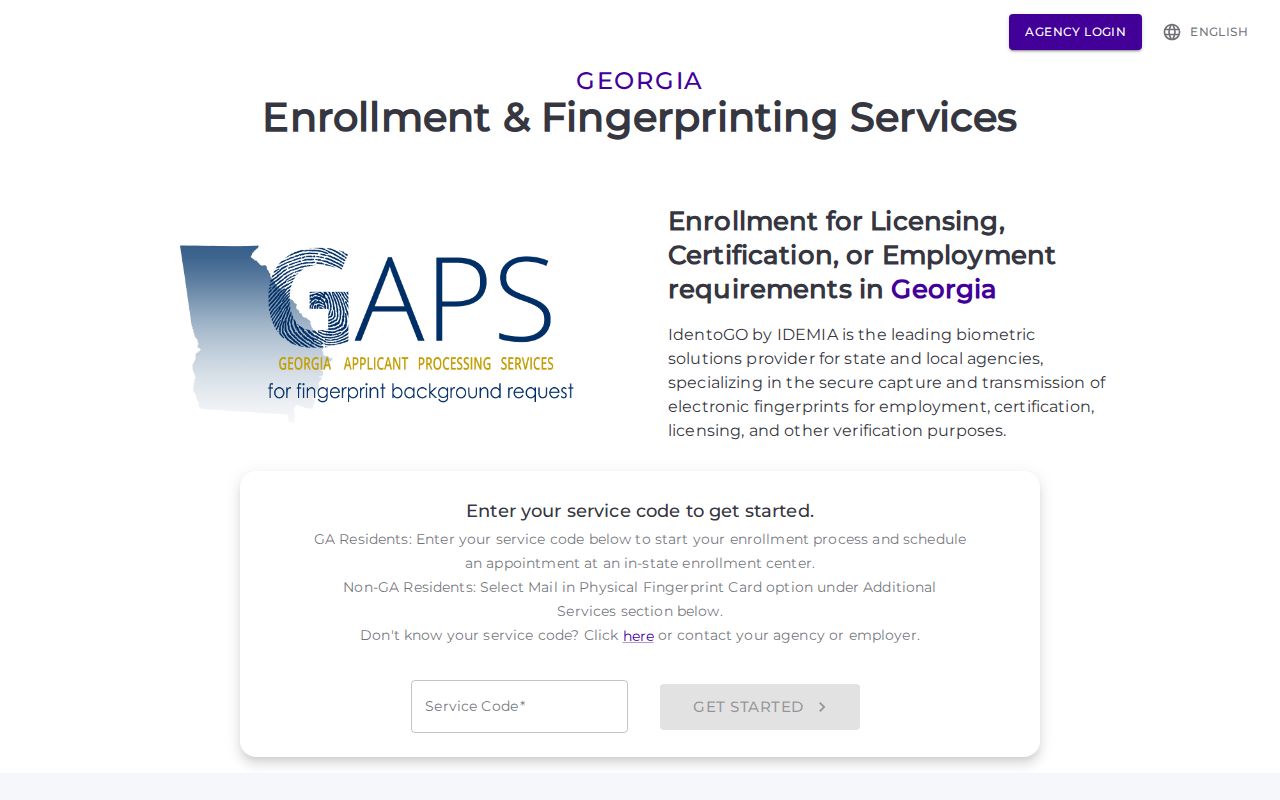
Georgia Felon Search is a different product. It can return public in-state felony-conviction information using full name, race, sex, and date of birth for a transaction fee, but it is not a complete rap sheet. A person reviewing a broader record should use the official self-review route described by GCIC. Match any statewide result to the local court disposition because missing or delayed source data can produce gaps. For a Fairmount case, the certified judgment remains stronger proof of the final charge and outcome.
Identity matching deserves care in a small set of local results. Compare the full name, date of birth where lawfully displayed, case number, arrest date, arresting agency, and offense tracking number when available. Similar names do not establish identity. If a self-review record has a wrong arrest field, contact the arresting agency. A missing or wrong disposition usually requires court or prosecutor documentation before GCIC can correct the source data.
Public Access Rules
Georgia law generally favors access to public agency records, but it does not make every line public. Send a Fairmount police request to the city custodian and a judicial-file request to the proper clerk. Describe the record narrowly and ask for segregable portions, meaning the nonexempt parts that can be released after protected material is removed. Georgia’s three-business-day rule requires a response, production if available, or a timetable and explanation. It does not promise instant completion.
Key Statutes:
Georgia Open Records Act, O.C.G.A. §§50-18-70 through 50-18-76 establishes the inspection and response process, subject to exemptions.
O.C.G.A. §35-3-34 governs public felony-conviction access and consent-based criminal-history routes.
O.C.G.A. §35-3-37 governs record restriction and related court-record sealing.
O.C.G.A. §35-3-38 penalizes unauthorized access, use, or dissemination of criminal-history information.
Expect lawful redaction of Social Security numbers, full birth dates, financial account data, juvenile material, victim and minor identifiers, sealed records, and some active-investigation content. If part of a file is withheld, ask the custodian to cite the legal basis and release the remainder. Keep the request, acknowledgement, estimate, and response together.